allied health

King Tut and Virtual Dissections!

What is a virtual cadaver lab? Why is King Tut in this title? (Read till the end to find out about Tut!)

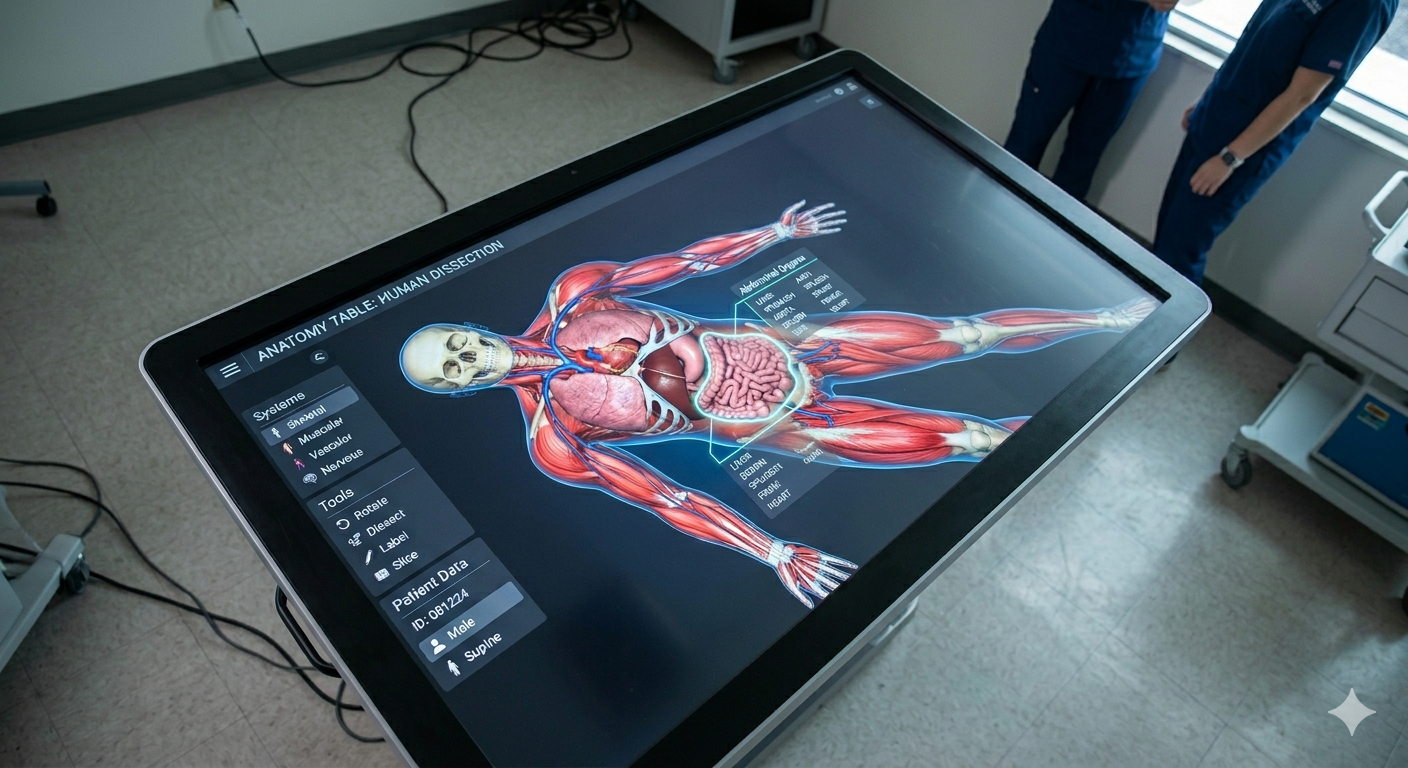
Technically possible because of 21st century IT, a 'Virtual Reality' lab provides a 3D, anatomical exploration of the human body in real time, with the useful ability to record and playback procedures, practice on multiple "specimens", regenerate features and delete mistakes. As there are over 100K medical students, hundreds of thousands of allied health workers and millions of high school students studying anatomy, and as only about 20,000 cadavers become available annually, virtual labs (really a high-tech, touchscreen table) are exceedingly important to medical education at all levels.
Why does a college consoler (intentional spelling!) care about virtual labs? I’m always asked about jobs! Well, you probably know that the job outlook for the allied health profession is healthy and growing: the demand for RNs— with an median wage of about $93,600 per year— results in a 5% job growth rate over the next ten years. Nearly 66,000 potential nurses are turned down in admissions from colleges annually. Why? GPAs being equal, alongside a shortage of faculty, did you know that another constraint on many allied health training programs is the lack of clinical placement? This is why virtual training labs are so important. Virtual labs, while not cheap, can extend the number of "placements" thus educating more students.

Cool, you read to the end! What does King Tut, a 3,300 year-old pharaoh, have to do with 21st-century nursing? Scientists built a life-size 3D reconstruction of his body, using a virtual anatomy table like the one in the photo, and took more than 2,000 CT scans of his mummified remains. Controversy ensued but that’s another story. The table itself, first manufactured in 2011, was popularized in the BBC documentary about Tuts’ scans in 2014. Now, there are roughly 5,000 of these tables in institutions worldwide! Fun fact: a premium table costs about $100,000.

Which Desk Will Be Yours?

Not sure what you want to be when you grow up? No worries...few do! In fact, the average adult switches careers every 5-7 years. Check out these pics of desks and read the accompanying text to explore what your workaday world might look like if you head down the various career pathways. Stay tuned b/c more "desks" are coming...

Medicine: Doctors

What's the first thing you notice in this photo? Are there really 7 degrees framed on the wall? If you are interested in studying to be a doctor,  you will need a ton of education, heavy on the science and math. Plan on a minimum of 8 years: 4 years of undergraduate & 4 years of medical school just to get the MD. To actually practice medicine requires another 2-5 years of residency and fellowship, depending on the type of medicine you want to practice. Scholarships to medical school are rare and usually reserved for the absolute best and brightest of an already-super-smart student population. So, be prepared to pay for this education. The good news: earning capacity of a medical degree is high. You should be able to repay those loans! 

blsdoctors

For more details: http://www.bls.gov/ooh/healthcare/physicians-and-surgeons.htm

Colleges to consider: Haverford, Lafayette, Hendrix, Case Western, Washington U

Medicine: Allied Health Professions

alliedhealthdesk


There are a wide variety of jobs available in the healthcare industry. And, healthcare, as a sector, is growing at a fast pace. Allied health jobs include: medical assistant, radiation technologist, dental hygienist, recreational therapist, physician assistant, pharmacist, nurse, home health aide, audiologist. Some healthcare jobs require six months of education, others a bachelor's, a master's or a doctoral degree. The more education, the higher the pay generally.

Dental hygienists have one of the better ROIs that I've seen. 

blsdentalhygiene.png

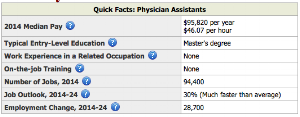
Physician Assistants examine, diagnose and treat patients. This field is growing at a very fast pace. Most students have a bachelor's degree with about 3 years of healthcare experience before they even enter the 3-year Physician Assistant program.

Education:

We all remember our favorite teachers. The job outlook for high school teachers is 'just a bit above average' and for college professors, 'above average'. 

bls teachers.png

To be a high school teacher requires an undergraduate degree plus a credential (for public school systems). That said, the more education you have, the more pay you will receive over your employment contract (teachers have strong unions). A college professor will have at least a Master's and usually a PhD.

Did you know that many professors need to read and teach and publish and do research, too?

Did you know that many professors need to read and teach and publish and do research, too?